Vintage Clothing Bales: How They Work, What to Expect and How to Profit
Vintage Clothing Bales: What They Are, What to Expect and How to Make Them Profitable
A vintage clothing bale is one of the cheapest ways to buy vintage stock, and one of the easiest ways to lose money if you do not know what you are doing. The price per kilogram looks tempting, but a bale arrives compressed, heavy, and mostly unseen. Your profit depends on what is inside, how much of it you can sell, and how much time and money you spend getting it ready.
This guide explains how vintage clothing bales work, how they are graded, what you can realistically expect inside, how to reduce risk before buying, and how to sort and sell the contents.
Read More: https://royalsvintage.com/blog/vintage-wholesale/carhartt-wholesale
What Is a Vintage Clothing Bale?
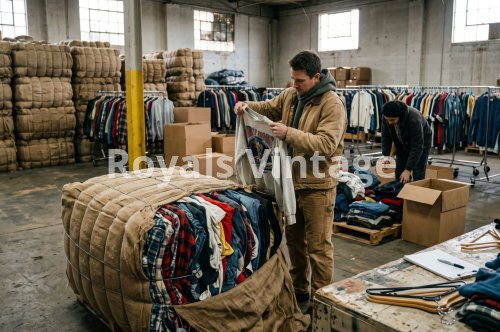
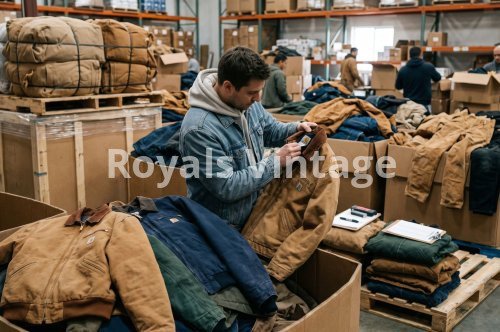
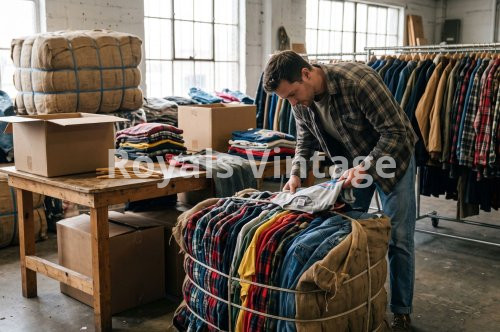
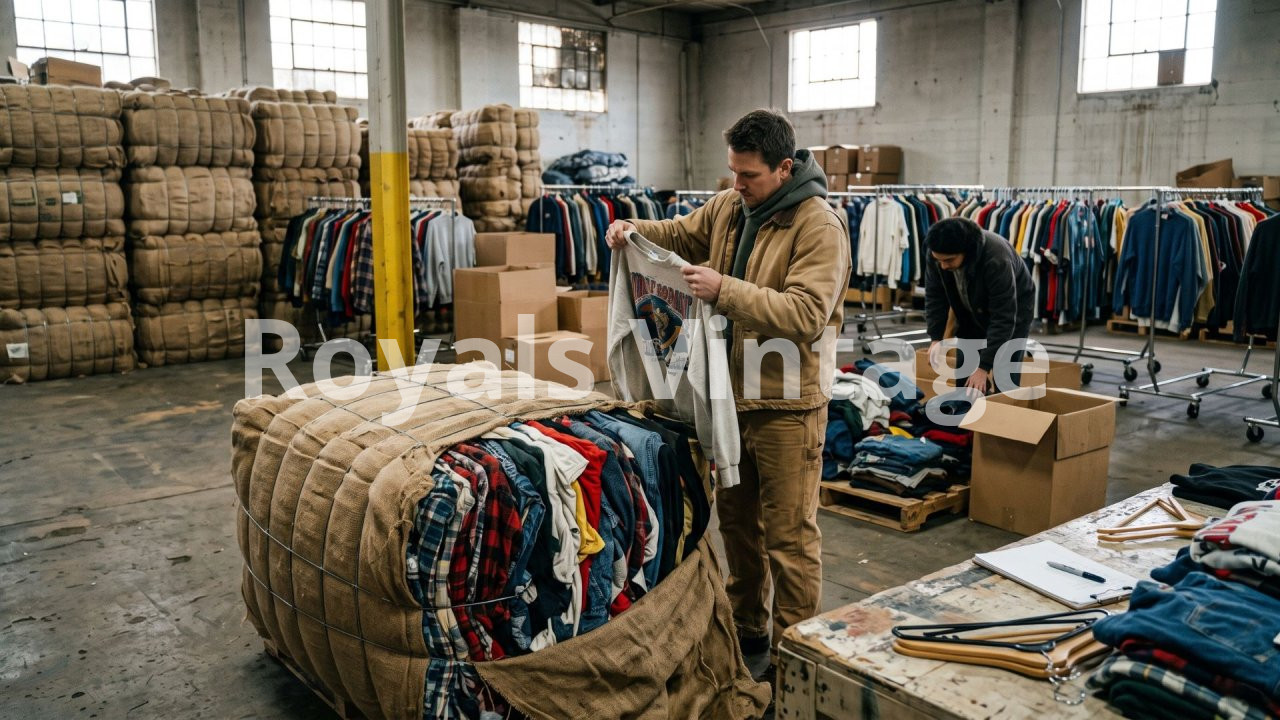
A bale is a large block of clothing compressed and wrapped or strapped for shipping. Clothing is packed tightly to save space and freight costs. Suppliers sell bales by weight, usually at a fixed price per kilogram, and the contents are sorted only to a limited degree.
A vintage bale usually contains older and retro clothing, such as denim, sportswear, sweatshirts, jackets, and knitwear. “Vintage” is used differently by different suppliers, so always ask what the supplier means by it.
How Big Is a Bale?
Bale weights vary by supplier and region. Many fall somewhere between about 25 kg and 100 kg, and some suppliers sell half bales or smaller lots. Always confirm:
- The exact weight of the bale
- Whether the weight is measured before or after packing
- The approximate number of pieces
- How the bale is wrapped and strapped
A heavier bale is not automatically better. A bale full of coats weighs a lot but contains fewer pieces than a bale of t-shirts.
Bale vs. Bundle: What Is the Difference?
- Bale: large, compressed, sold by weight, usually sorted loosely by category or grade. Lowest price per piece, most sorting work, most risk.
- Bundle: smaller, often hand-packed, sometimes curated, usually sold by piece or small lot. Higher price per piece, less work, more predictable.
If you are new, a small bundle is often safer. Bales suit sellers who can handle volume, storage, and sorting.
How Vintage Clothing Bales Are Graded
Grading names are not standardised, so each supplier defines them differently. Common labels include:
Premium or Cream
The highest grade. Better condition, stronger brands, and more desirable pieces. Highest price.
Grade A
Good condition with light wear. A common choice for resellers.
Grade B
Visible wear or small flaws. Lower price, more work to sort and clean.
Grade C or Economy
Heavier wear, damage, or items needing repair. Lowest price and lowest resale value.
Mixed or Unsorted
Several grades together, with the quality depending on how the bale was packed.
Always Ask for the Supplier’s Definition
“Premium” at one supplier may be “Grade A” at another. Ask what percentage of items you can usually expect to be sellable, and what the supplier counts as a defect.
What Is Usually Inside a Vintage Bale?
Contents depend on the category and grade. Typical categories include:
- Denim: jackets, jeans, and shorts.
- Sportswear: track tops, windbreakers, football shirts, and tracksuit pieces.
- Sweatshirts and hoodies: heavy cotton and graphic styles.
- T-shirts: plain and printed tees.
- Knitwear: jumpers and cardigans.
- Shirts and flannels.
- Jackets and coats: fewer pieces, higher resale value.
Expect a Mix of Quality
In any bale you will find a few strong pieces, a mid-range core, and some weak or unsellable items. No supplier can guarantee that every item is a winner.
What You Should Not Expect
Do not expect every bale to contain rare or designer pieces. Be cautious with any claim that all items are “rare,” “designer,” or “premium” at a very low price.
Pricing: How Bale Costs Really Work
Price Per Kilogram
Your bale price is weight multiplied by the price per kilogram. A lower price per kilogram can still mean a high cost per piece if the bale is full of heavy items.
Extra Costs to Add
- Freight and shipping: bales are heavy, so shipping can be a large part of your cost.
- Import taxes and customs: if buying from overseas.
- Handling and delivery: pallet, forklift, or delivery-to-door fees.
- Payment and currency fees.
- Cleaning, repair, and packaging.
- Storage space.
Calculate Your Cost per Sellable Piece
Cost per sellable piece = (bale price + freight + taxes + handling + cleaning) ÷ number of sellable items
Yield: How Much of a Bale Is Actually Sellable?
Yield is the share of a bale you can sell. It is the most important number in bale buying.
Example
Imagine a bale with:
- Bale price: 500
- Freight and taxes: 150
- Handling and cleaning: 50
- Total cost: 700
If the bale contains 200 pieces and 130 are sellable, your cost is about 5.38 per sellable piece. If only 90 are sellable, your cost rises to about 7.78. The numbers are only an example, but the lesson is clear: a small change in yield changes your profit a lot.
How to Estimate Yield
- Ask the supplier for typical sellable percentages by grade.
- Start with a half bale or smaller lot to measure your real yield.
- Record your results for every bale, so you can compare suppliers.
How to Reduce Risk Before Buying a Bale
Order a Small Lot First
Never start with several large bales from a new supplier.
Ask for Real Photos and Videos
Request footage of actual bales being opened, or sample photos from the same grade. Catalogue images are not enough.
Ask How the Bale Is Packed
Find out whether contents are sorted by category, grade, or era, and whether the supplier sorts by hand.
Confirm the Details in Writing
Get the weight, grade, category, price, shipping terms, and returns or claims policy in an invoice or written message.
Check the Supplier
Verify business details, read independent reviews, and look for a consistent history.
Use Traceable Payments
Keep proof of payment, and avoid sending large amounts to a supplier you have not tested.
Freight, Delivery and Storage
Plan Delivery Before You Order
Bales are heavy and bulky. Ask whether delivery is to a business address, a loading dock, or a pallet pickup point, and whether you need help unloading.
Check Customs and Taxes
For overseas bales, confirm who handles customs and what taxes may apply. Rules change, so check your country’s official guidance.
Prepare Dry, Clean Storage
Moisture causes mould and strong odours. Store bales off the floor, away from damp walls, and away from direct sunlight.
Do Not Leave Bales Sealed Forever
Compressed clothing can develop odours and creases. Open and sort bales soon after delivery.
How to Sort a Vintage Clothing Bale
Treat sorting as a process, not a rummage.
Step 1: Prepare Your Space
Use a clean, well-lit area with tables, rails, and labelled boxes or bags.
Step 2: Open and Air the Bale
Cut straps carefully, open the wrapping, and let the clothes breathe. Wear gloves and a mask if you are sensitive to dust.
Step 3: Do a First Pass by Category
Separate denim, sportswear, sweatshirts, tees, knitwear, shirts, and outerwear.
Step 4: Grade by Condition
Divide items into:
- Ready to sell: clean and in good condition.
- Needs work: washing, repair, or steaming.
- Not sellable: too damaged, stained, or unpleasant to fix.
Step 5: Pull Out Your Best Pieces
Set aside brands, standout denim, sportswear, and unusual items for individual listings and higher prices.
Step 6: Clean Gently
Wash in cold water with mild detergent, turn prints inside out, and avoid high heat. Handle delicate or valuable pieces separately.
Step 7: Measure, Photograph and List
Record measurements, photograph in natural light, and write honest descriptions.
Step 8: Record Your Results
Note the number of items in each group and the final yield for each bale.
What to Do With Items You Cannot Sell Individually
- Mixed discount lots: group lower-value items into small bundles.
- Market stall stock: sell cheaper pieces at fixed low prices.
- Repair and upcycle: fix or restyle items that have potential.
- Donate or recycle: responsibly dispose of what cannot be sold.
Having a plan for lower-grade items protects your margin.
Which Categories Work Best in Vintage Bales?
Denim
Strong demand and good resale value, even from mid-grade lots.
Sportswear
Popular with younger buyers, especially retro track tops and sweatshirts.
Sweatshirts and Hoodies
Reliable sellers, particularly in cooler months.
Outerwear
Higher prices per item, but heavier and more costly to ship.
T-Shirts
Easy to store and ship, with steady but lower prices.
Check recent sold listings in your market before choosing a category.
Who Should Buy Vintage Clothing Bales?
Good Fit
- Experienced resellers who know their market.
- Sellers with storage space and time for sorting.
- Market stall traders who need volume.
- Businesses with a clear plan for lower-grade items.
Not a Good Fit
- Complete beginners with no sales channel.
- Sellers with limited space or time.
- Anyone who needs consistent, photo-ready stock without sorting.
If you prefer consistent, ready-to-list stock, a curated bundle or sorted lot may suit you better. Royals Vintage offers curated vintage stock for resellers who want pieces that are easier to list without heavy sorting.
Red Flags When Buying Vintage Clothing Bales
- Prices far below every other supplier.
- No clear grade definitions or sellable percentage.
- Stock photos only, with no real bale footage.
- Claims that every item is rare, designer, or premium.
- No business details or verifiable history.
- Pressure to pay immediately.
- Hard-to-trace payment methods only.
- No policy for missing or misdescribed contents.
If several of these appear together, choose another supplier.
Step-by-Step: Buying Your First Vintage Bale
- Define your niche: denim, sportswear, or a general mix.
- Set a budget: include freight, taxes, and storage.
- Shortlist three suppliers: compare grades, price per kg, and communication.
- Ask for photos or videos of real stock.
- Order a half bale or the smallest lot available.
- Confirm everything in writing and pay safely.
- Sort the bale and record your yield.
- List your best items first and track how fast they sell.
- Compare results before ordering again.
Common Mistakes With Vintage Clothing Bales
- Choosing only on price per kilogram.
- Ignoring freight, taxes, and handling.
- Starting with a large bale from an untested supplier.
- Underestimating sorting time and storage space.
- Not tracking yield by bale and supplier.
- Expecting every item to be vintage, branded, or perfect.
- Leaving bales sealed and damp.
- Having no plan for unsellable items.
Frequently Asked Questions About Vintage Clothing Bales
What is a vintage clothing bale?
It is a large, compressed block of vintage and retro clothing sold by weight, usually at a fixed price per kilogram.
How much does a vintage clothing bale weigh?
Weights vary by supplier. Many bales range from about 25 kg to 100 kg. Always confirm the exact weight before ordering.
How many items are in a vintage bale?
It depends on weight and category. Lightweight items such as t-shirts mean more pieces, while coats and jackets mean fewer.
Are vintage clothing bales profitable?
They can be, if you know your market, calculate cost per sellable piece, achieve a good yield, and sell items well. Poor yield and high freight can wipe out profit.
What does bale grading mean?
Grading describes condition and quality. Names such as premium, Grade A, B, and C vary between suppliers, so ask for each supplier’s definition.
What percentage of a bale is sellable?
It varies by supplier and grade. Ask for typical percentages and test with a small lot to measure your own yield.
Is it better to buy a bale or a bundle?
Bales offer lower prices but need more sorting, storage, and risk. Bundles cost more per piece but are often easier and more predictable, especially for beginners.
Can I buy half a bale?
Some suppliers sell half bales or smaller lots. Ask before ordering, especially if you are testing a new supplier.
How do I store clothing bales?
Keep them in a dry, clean, well-ventilated space, off the floor and away from damp and direct sunlight. Open and sort them soon after delivery.
Conclusion
Vintage clothing bales can deliver strong margins, but only for buyers who plan carefully. Understand how grading works, include freight and handling in your costs, order a small lot first, measure your yield, and sort every bale with a clear process. Once you know which suppliers and categories perform, you can scale with confidence.
If you would rather skip heavy sorting and start with consistent, ready-to-list pieces, explore the collection at Royals Vintage and discover curated vintage stock selected for style and quality.