Branded Clothes Wholesale: Sources, Lot Types and How to Buy Smart
Branded Clothes Wholesale: A Practical Guide to Sourcing Genuine Brand Stock for Resale
Branded clothing sells faster than unbranded clothing. Customers recognise the label, trust the quality, and are often searching for a specific brand by name. That is why branded clothes wholesale is so attractive to resellers. But it is also a market where prices can be misleading, stock can be mixed or misdescribed, and fake labels are a real risk.
This guide explains how branded clothes wholesale works, where genuine stock comes from, which lot types you can buy, how to plan your brand mix, and how to protect your profit and reputation.
Read More: https://royalsvintage.com/blog/vintage-wholesale/wholesale-vintage-clothing
What Is Branded Clothes Wholesale?
Branded clothes wholesale means buying clothing from recognised brands in bulk at a lower price per piece than retail, then reselling the items individually. The stock may be new, surplus, returned, or pre-owned, depending on the source.
Branded vs. Designer Clothing
Branded clothing usually refers to well-known everyday labels, such as sportswear, denim, outdoor, and high-street brands. Designer and luxury labels sit in a higher price tier with stricter distribution controls. If you want to work with that tier, read our guide to designer clothes wholesale first.
Understanding Brand Tiers
Knowing the tier helps you set realistic expectations on price, margin, and risk.
Sportswear and Athleisure Brands
Tracksuits, hoodies, trainers, and activewear. Demand is high all year, and buyers are often loyal to specific labels.
Denim and Casual Brands
Jeans, jackets, shirts, and relaxed everyday wear. These are steady sellers with a wide customer base.
High-Street and Fast-Fashion Brands
Affordable fashion with quick turnover. Margins per item are smaller, but volumes can be high.
Outdoor and Performance Brands
Jackets, fleeces, and technical wear. Higher price per piece and strong demand in cold seasons.
Premium and Contemporary Brands
Higher quality and higher prices than the high street, but more accessible than luxury.
Higher-tier brands usually mean higher margin per item, but also higher capital at risk and stricter rules about authenticity and selling.
Where Genuine Branded Wholesale Stock Comes From
Overstock and End-of-Season Stock
Brands and retailers often have unsold stock at the end of a season. This can be sold in bulk through surplus suppliers at reduced prices. Quality is usually good, but sizes and styles may be limited.
Customer Returns and Ex-Retail Stock
Returned items from online and high-street stores are sold in bulk, often as pallets or lots. Prices are low, but condition varies, so you need to inspect and grade carefully.
Cancelled Orders and Production Surplus
Factories sometimes have extra stock after cancelled orders. Items can be brand new, but you need proof that the stock is genuine and legally sellable.
Label-Cut Stock
Some surplus is sold with brand labels removed or cut. This can reduce brand restrictions, but you cannot describe the items using the brand name unless you can prove what they are. Be careful with how you list them.
Liquidation and Closing-Down Stock
Stock from closed stores or insolvent retailers can include genuine brands at heavy discounts. Ask for documentation, because these lots can also contain mixed or unverified items.
Pre-Owned and Vintage Branded Stock
Sorted secondhand and vintage bundles often include well-known brands, especially in sportswear and denim. Prices depend on grading and brand selection. Royals Vintage works with curated vintage stock, so check which brands appear in each bundle before ordering.
Types of Branded Clothing Lots
Mixed Brand Lots
A mix of different labels and categories. They are cheaper but less predictable, and the brand quality can vary widely.
Single-Brand Lots
All items from one brand. These are easier to price and market, and attract buyers who search by brand name.
Category Lots
For example, branded hoodies only or branded jeans only. Easy to list and photograph, and good for focused stores.
Pallet Lots
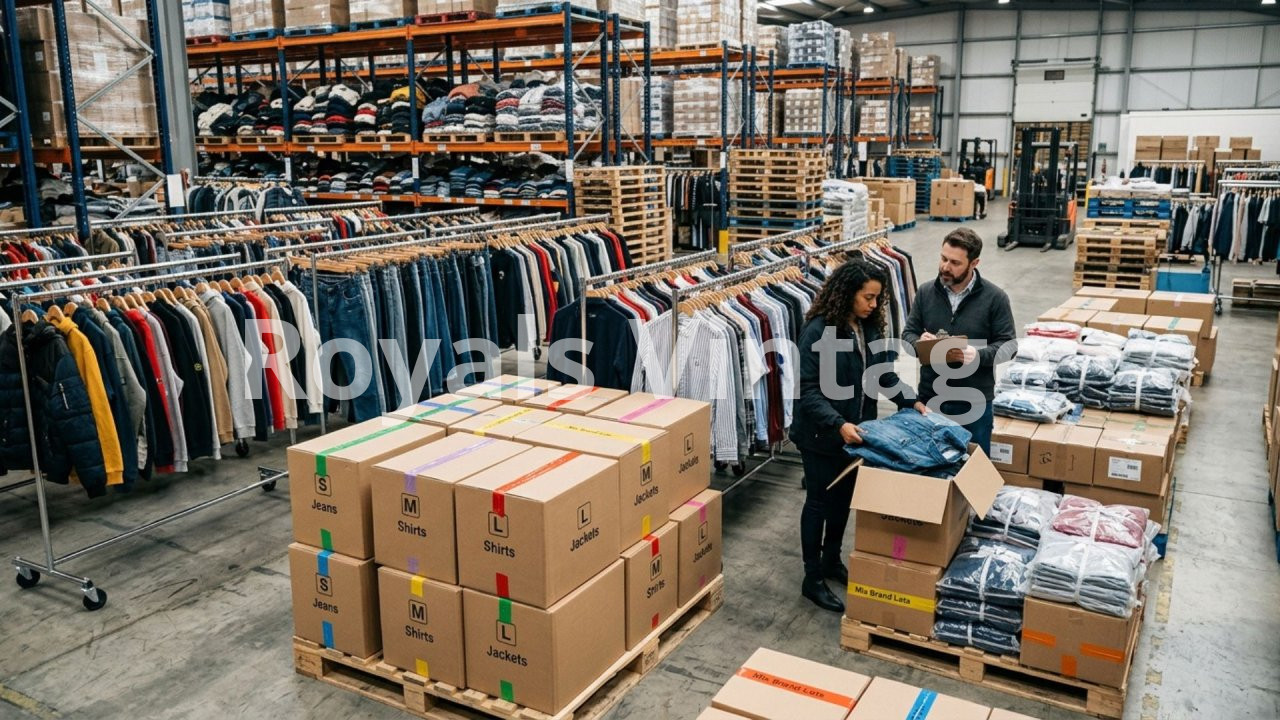
Large quantities packed on a pallet, common for returns and surplus. They offer low cost per piece but need storage space and sorting time.
Manifested vs. Unmanifested Lots
- Manifested lots: come with a list of items, quantities, and sometimes values. You know what you are buying.
- Unmanifested lots: have no detailed list. Cheaper, but riskier, because you rely on the supplier’s description.
If you are new, choose manifested or small lots first.
How to Check That Branded Stock Is Genuine
Use several checks together.
- Ask for sourcing information: where did the stock come from?
- Request invoices or documentation: legitimate suppliers can usually explain the supply chain.
- Inspect labels and tags: check logo spelling, fonts, spacing, stitching, and tag placement.
- Check hardware and construction: zips, buttons, seams, and prints should look consistent with the brand’s quality.
- Compare with known genuine items: use brand information and trusted references.
- Test with a small order first: never start with a large lot.
If a price for new branded stock is far below the normal wholesale range, ask more questions before paying.
Brand Restrictions and Legal Basics
Rules vary by country, so check local law or speak to a professional before buying in volume.
- Counterfeit goods: selling fakes can lead to seized stock and legal action, even if you did not know they were fake.
- Trademark use: do not imply you are an official partner of a brand unless you are one. Describe items honestly, such as “new with tags,” “surplus,” or “pre-owned.”
- Selling restrictions: some brands limit how or where their products can be sold. Check the terms of your supplier and the marketplaces you use.
- Accurate descriptions: state whether items are new, returned, used, or vintage.
- Record keeping: keep invoices, supplier details, and photos for every purchase.
Never call yourself an authorised dealer unless the brand has approved you.
How to Build a Smart Brand Mix
Start With Brands Your Customers Already Search For
Look at what is selling on resale apps and social media in your market, not just what you personally like.
Balance Risk and Reward
- Core brands: a few reliable, high-demand labels for steady sales.
- Support brands: mid-demand labels to widen your range.
- Test brands: a small number of new labels to see what your customers like.
Match Brands to Your Sales Channel
Social media and resale apps favour recognisable sportswear and streetwear labels. Market stalls do well with everyday denim and casual brands.
Avoid Overloading on One Brand
If a single label falls out of fashion, a stock made up of mostly that brand can become hard to sell.
How to Price Branded Clothes for Profit
Calculate Your True Cost
Cost per sellable piece = (lot cost + shipping + taxes and duty + packaging + payment fees) ÷ number of sellable items
For returns and surplus lots, also include time and cost for cleaning, repair, and re-tagging.
Research Real Selling Prices
Check recent sold listings for the same brand, item, and condition. Asking prices can be misleading.
Price by Condition
New with tags, new without tags, excellent, and used items sell at very different prices. Grade each item honestly.
Remember Selling Costs
Platform fees, payment fees, advertising, and returns reduce your margin. Calculate profit after all of them.
What Sells Best in Branded Clothes Wholesale?
- Hoodies, sweatshirts, and tracksuit tops
- Joggers and activewear
- Denim jackets and jeans
- T-shirts and polo shirts
- Outerwear and fleeces
- Retro and vintage branded sportswear
Demand changes with trends and seasons, so check recent sales before ordering large quantities.
How to Evaluate a Branded Wholesale Supplier
- Do they share real photos or videos of the actual stock?
- Can they explain where the stock comes from?
- Is the lot manifested, and does the description match the contents?
- Is grading clearly defined?
- Are minimum orders and total costs clear?
- Do independent reviews support their claims?
- Do they have a clear policy for missing or incorrect items?
A supplier who answers these clearly and quickly is usually worth testing with a small order.
Red Flags in Branded Wholesale Offers
- Prices far below normal for new branded stock.
- No company details, address, or verifiable history.
- Refusal to show real photos, invoices, or sourcing details.
- Pressure to pay immediately.
- Hard-to-trace payment methods only.
- Stock photos copied from brand websites.
- Vague answers about condition, grade, or quantity.
If several of these appear together, walk away.
Step-by-Step: How to Place Your First Branded Wholesale Order
- Choose your brand focus: one or two categories and a few brands.
- Set a small trial budget: only what you can afford to lose.
- Shortlist three suppliers: compare price, sourcing, and communication.
- Request manifests and real photos.
- Confirm grading and returns in writing.
- Pay with a traceable method.
- Inspect everything on arrival: check labels, condition, and quantities.
- Sort into ready, needs work, and not sellable.
- List, track sales, and reorder what works.
Common Mistakes in Branded Clothes Wholesale
- Trusting prices that look too good to be true.
- Buying unmanifested lots without testing.
- Ignoring condition grading.
- Forgetting shipping, taxes, and cleaning costs.
- Using brand names in a misleading way.
- Putting the whole budget into one brand.
- Not checking current demand before ordering.
Frequently Asked Questions About Branded Clothes Wholesale
What is branded clothes wholesale?
It is the bulk purchase of clothing from recognised brands at a lower price per piece, to resell individually for profit.
Where can I buy branded clothes wholesale?
You can buy from surplus suppliers, liquidation companies, returns and ex-retail lot sellers, authorised distributors, and sorted pre-owned or vintage wholesalers.
Is branded wholesale clothing genuine?
It can be, but only when it comes from a verified source. Ask for sourcing information, inspect labels and construction, and test with a small order.
What is a manifested lot?
A manifested lot comes with a list of items and quantities, so you know what you are buying. Unmanifested lots have no detailed list and carry more risk.
Can I sell branded clothes online?
In many markets, reselling genuine items is allowed, but rules vary. Do not imply an official partnership with a brand, and check marketplace and supplier terms.
Are returns and surplus lots worth buying?
They can be profitable because of low costs, but condition varies. Calculate cost per sellable piece and allow time for sorting and cleaning.
Which branded clothes are best for resellers?
Sportswear, hoodies, denim, and outerwear are often popular, but always check current demand and recent sold prices.
Can I buy branded clothes wholesale in small quantities?
Many suppliers offer smaller lots or starter bundles. Always confirm the minimum order and start small.
Conclusion
Branded clothes wholesale can be a fast, profitable way to build your stock, but only if you buy carefully. Understand brand tiers, choose verified sources, prefer manifested lots, calculate your true cost per sellable piece, and describe every item honestly. Start small, learn which brands your customers want, and reorder with confidence.
If you want distinctive branded and vintage pieces for your resale business, explore the collection at Royals Vintage and discover curated stock selected for style and quality.