Vintage Wholesalers: How They Work and How to Choose the Right One

Vintage Wholesalers: How They Work and How to Choose the Right Partner for Your Business
Behind every successful vintage store is a wholesaler who supplies the stock. The wholesaler you choose affects the quality of your pieces, how fast you can restock, how much time you spend sorting, and ultimately how much profit you make.
Not all vintage wholesalers work the same way. Some sell huge unsorted bales, others hand-pick every item, and some focus on a single category like denim or sportswear. This guide explains how vintage wholesalers operate, the main types you will meet, how to compare them, and what to ask before you place your first order.
Read More: https://royalsvintage.com/blog/vintage-wholesale-uk/suppliers-for-reselling-uk
What Is a Vintage Wholesaler?
A vintage wholesaler is a business that collects, sorts, and sells pre-owned and vintage clothing in bulk to resellers, boutiques, and online sellers. Instead of selling single items to the public, they sell lots, bundles, or bales at a lower price per piece so that buyers can resell at a profit.
How Vintage Wholesalers Source Their Stock
Understanding where stock comes from helps you judge quality and pricing.
Collection and Donation Streams
Large volumes of used clothing are collected through clothing banks, charities, and textile collection programs. This is the starting point for much of the secondhand market.
Sorting and Grading Facilities
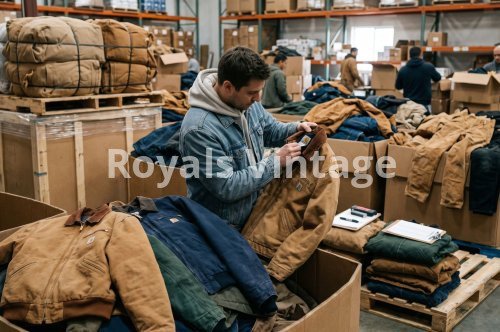
Collected clothing is sorted by category, condition, and sometimes brand or era. Skilled sorters pull out the vintage and higher-value items, which is why sorted vintage costs more than unsorted stock.
Importers and Re-Sellers
Some wholesalers buy graded stock in large volumes from sorting centres, then re-sort it for their own customers.
Direct Sourcing
Some vintage specialists source directly from collectors, estate clearances, and local markets, which can lead to more unique pieces.
The closer a wholesaler is to the original sorting stage, the more control they usually have over quality and selection.
Main Types of Vintage Wholesalers
Bale Sellers
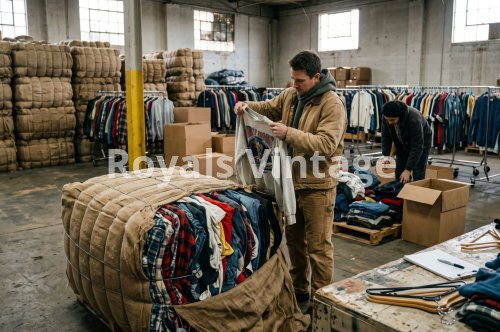
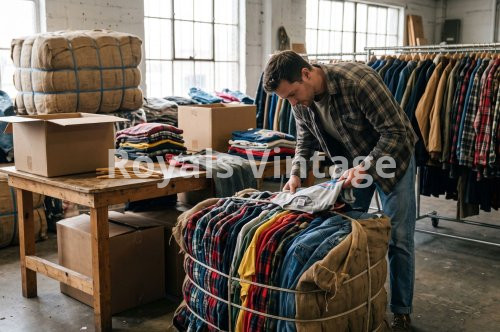
They sell large, pre-packed bales of mixed clothing, often by weight. Prices are low, but quality varies and you will spend time sorting. Best for experienced resellers who can handle volume.
Sorted and Graded Wholesalers
They separate stock by category and condition, such as denim only or jackets only. You pay more but waste less time and know what to expect.
Curated Vintage Wholesalers
They hand-pick pieces for style, era, brand, or condition. Prices are higher, but items are ready to photograph and sell, and each bundle is more consistent. Royals Vintage offers curated vintage stock for resellers who want unique pieces without sorting through large bales.
Category Specialists
They focus on one niche, such as sportswear, workwear, denim, or knitwear. These wholesalers often know their products deeply and can advise on trends.
Mixed-Range Wholesalers
They offer a wide variety of vintage and secondhand items in one place. This works well for general stores that want a broad range.
Which Type of Wholesaler Is Right for You?
- Beginner with a small budget: a sorted or curated starter bundle.
- Experienced seller with time to sort: bale sellers for maximum margin.
- Boutique or Instagram store: curated wholesalers for consistent quality.
- Niche brand (such as 90s sportswear): category specialists.
- Market stall: mixed-range wholesalers for variety and quick restocking.
Many resellers use two types together, such as a curated wholesaler for premium pieces and a sorted wholesaler for everyday basics.
How to Compare Vintage Wholesalers: A Simple Scorecard
Rate each wholesaler from 1 to 5 on these points, then compare totals.
Stock Quality and Consistency
Do bundles match the description, and is quality steady from order to order?
Selection and Variety
Do they offer the categories, eras, and sizes your customers want?
Pricing Transparency
Is pricing clear, per piece or per kilogram, with no surprise fees?
Minimum Order Quantity
Does the MOQ suit your budget and storage space?
Communication
Do they respond quickly, answer clearly, and share photos or videos on request?
Delivery and Packaging
Is shipping reliable, tracked, and well packaged?
Reputation
Do independent reviews, social media activity, and past buyers support their claims?
Support After the Sale
Do they have a clear process for missing or incorrect items?
A wholesaler that scores well across most categories is usually worth a trial order, even if it is not the cheapest.
Questions to Ask a Vintage Wholesaler
Good wholesalers are happy to answer these.
- How do you source and sort your stock?
- How do you grade items, and what does each grade mean?
- Do you sell by piece, bundle, or weight?
- What is your minimum order?
- Can I choose categories, sizes, or eras?
- Can you send real photos or a video of the actual stock?
- What percentage of a bundle is usually premium quality?
- How long does delivery take, and is tracking included?
- What is your policy if items are missing or not as described?
- Do you offer repeat-order discounts or regular drops?
Clear, confident answers are a strong sign of a professional business.
How to Evaluate Your First Order
Treat your first order as a test, not a final decision.
Check the Delivery Against the Invoice
Count the items and make sure categories and quantities match what you paid for.
Sort Into Three Groups
- Ready to sell: clean, in good condition, and photo-ready.
- Needs work: requires washing, minor repair, or steaming.
- Not sellable: damaged beyond reasonable repair.
Calculate Your Real Sell-Through Potential
Work out your cost per sellable piece, and estimate your selling price for each group. Divide your total cost by the number of sellable items to see your true cost.
Test Your Pricing and Sales Speed
List a sample of the stock and track how quickly each category sells. This tells you what to reorder.
Give Feedback to the Wholesaler
Tell them what worked and what did not. Good wholesalers use feedback to improve your next bundle.
What Affects Wholesale Pricing Between Vintage Wholesalers?
- Level of sorting: unsorted stock is cheaper than curated stock.
- Condition and grade: premium grades cost more.
- Brand and era: desirable labels and decades increase price.
- Category: jackets and denim usually cost more than tees.
- Order size: larger orders often earn lower per-piece prices.
- Location and shipping: distance, freight, and taxes affect your final cost.
A lower price per kilogram can still be more expensive in the end if many items are unsellable. Always judge by cost per sellable piece.
Common Mistakes When Choosing a Vintage Wholesaler
- Choosing only the lowest price.
- Ordering a large bale before testing a small one.
- Not asking how items are graded.
- Ignoring shipping and import costs.
- Expecting every item in a bundle to be perfect.
- Not checking what categories actually sell in your market.
- Relying on one wholesaler only.
How to Build a Strong Relationship With a Wholesaler
Start Small and Be Consistent
Regular small orders build trust faster than one large order followed by silence.
Communicate Clearly
Share your target customer, preferred categories, and budget so they can recommend suitable stock.
Pay On Time
Wholesalers prioritise reliable buyers, which can lead to first access to new stock.
Ask About New Drops
Many vintage wholesalers release limited batches. Early access helps you secure the best pieces.
Keep a Backup
Work with at least two wholesalers so a delay or stock shortage never stops your business.
Where to Find Vintage Wholesalers
- Online vintage wholesale stores: easy to compare and order from home.
- Social media: many wholesalers show stock and new drops on Instagram and TikTok.
- Trade fairs and vintage markets: meet suppliers in person and inspect stock.
- Reseller communities: useful for recommendations, but always verify independently.
- Direct enquiries: contact sorters and importers with your business details and a clear request.
Always check business details, reviews, and sample quality before committing to a larger purchase.
FAQ's
What is a vintage wholesaler?
A vintage wholesaler sells pre-owned and vintage clothing in bulk to resellers and retailers at a lower price per piece than retail.
How do I choose a good vintage wholesaler?
Compare stock quality, grading, pricing, minimum order, communication, delivery, and reputation. Start with a small trial order before scaling.
What is the difference between a bale seller and a curated wholesaler?
Bale sellers offer large, mixed lots at low prices, and you sort the stock yourself. Curated wholesalers hand-pick pieces for style and condition, which saves time but costs more per piece.
Are vintage wholesalers profitable to buy from?
Yes, when you choose the right stock and price correctly. Low cost per piece and unique items can create strong margins.
What minimum order do vintage wholesalers usually ask for?
It varies by wholesaler. Some set a minimum number of pieces, others a minimum weight or order value. Always confirm before you order.
Can I choose what is in my bundle?
Some wholesalers allow you to choose categories or sizes, while others sell fixed mixed lots. Ask before you buy.
How can I tell if a vintage wholesaler is trustworthy?
Check business details, read independent reviews, ask for real photos or videos, confirm terms in writing, and order a small sample first.
Should I use more than one wholesaler?
Yes. Using two or more wholesalers protects you from delays and stock shortages and gives your store a wider range.
Conclusion
The best vintage wholesaler is not always the cheapest. It is the one that delivers consistent quality, clear grading, honest communication, and stock your customers want. Learn how wholesalers source and sort, use a simple scorecard to compare them, test with a small order, and build relationships that last.