Bulk Clothing Suppliers UK: How to Compare, Vet and Choose the Right One
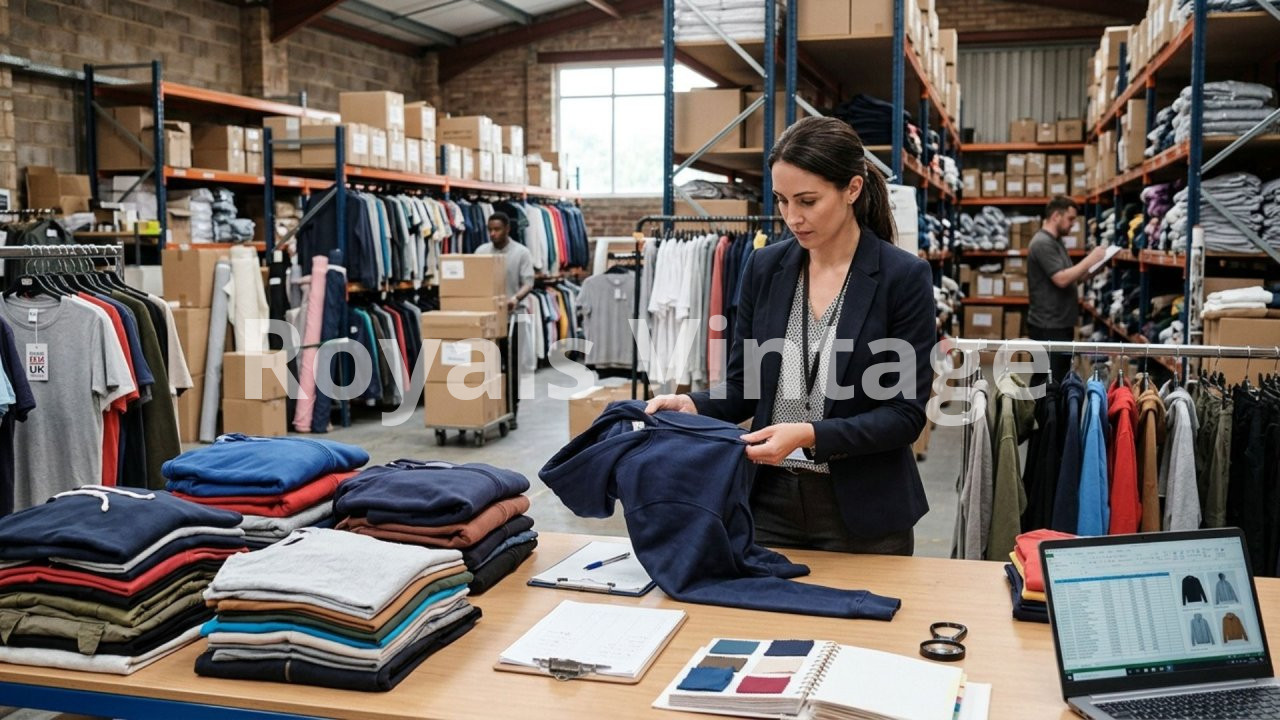
Bulk Clothing Suppliers UK: A Practical Guide to Comparing and Choosing the Right Supplier
Finding bulk clothing suppliers in the UK is easy. Finding the right one is harder. Search results are full of wholesalers, importers, manufacturers, and middlemen, and they all look similar online. But they work in very different ways, with different minimum orders, delivery times, prices, and risks.
This guide helps you compare the main types of UK bulk clothing suppliers, understand MOQs and lead times, check ethical and legal basics, and build a shortlist you can trust.
Read More: https://royalsvintage.com/blog/vintage-wholesale/buy-clothes-in-bulk
Why Source Bulk Clothing From UK Suppliers?
Faster Delivery
Local suppliers can often deliver in days rather than weeks, which helps you restock quickly and react to trends.
Easier Communication and Returns
Working in the same country, time zone, and legal system makes it simpler to solve problems with missing or faulty items.
Lower Import Risk
Buying from within the UK reduces exposure to customs delays, import costs, and currency changes.
Smaller Minimum Orders
Many UK wholesalers sell in smaller lots than overseas manufacturers, which suits new and growing businesses.
The trade-off is that UK prices per item can be higher than importing directly, so compare total cost, not only the headline price.
Types of Bulk Clothing Suppliers in the UK
UK Wholesalers and Distributors
They buy from manufacturers and sell to businesses in smaller quantities.
- Best for: online stores, boutiques, and market traders who want quick restocking.
- Watch out for: margins are shared with the wholesaler, so prices are higher than at factory level.
Importers
They bring clothing in from overseas and sell it on within the UK.
- Best for: buyers who want imported pricing without handling customs.
- Watch out for: stock can sell out quickly, and quality varies between batches.
UK Clothing Manufacturers
Factories and cut-and-sew units that produce clothing in the UK.
- Best for: brands that want shorter lead times, smaller production runs, and “made in UK” positioning.
- Watch out for: higher unit costs, and minimum order quantities per style that can still be significant.
Private Label and Custom Suppliers
They produce clothing to your design, label, or specification, or add your branding to existing styles.
- Best for: brands, clubs, businesses, and uniform buyers.
- Watch out for: longer lead times, sampling costs, and higher MOQs per colour and size.
Surplus, Overstock and Liquidation Suppliers
They sell end-of-line, returned, or clearance stock at reduced prices.
- Best for: buyers with a flexible range who can work with whatever is available.
- Watch out for: limited sizes and styles, and condition that varies by lot.
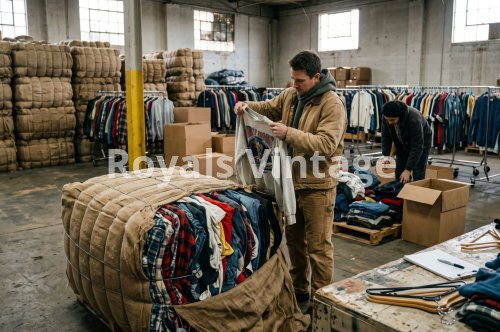
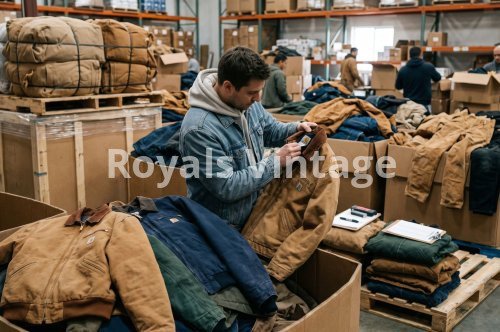
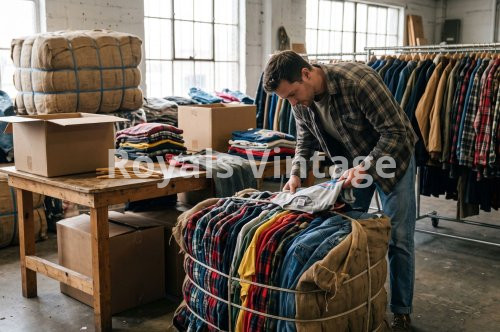
Secondhand and Vintage Suppliers
They sort and sell pre-owned and vintage clothing in bundles or by weight.
- Best for: resellers who want unique products and strong margins.
- Watch out for: grading differences between suppliers. Royals Vintage offers curated vintage stock for UK resellers who want pieces that stand out from standard high-street products.
Supplier Types at a Glance
- Wholesaler: fast delivery, medium prices, low to medium MOQ.
- Importer: lower prices, variable quality, medium MOQ.
- UK manufacturer: higher prices, high control, medium to high MOQ.
- Private label: custom products, long lead time, high MOQ.
- Surplus or liquidation: lowest prices, unpredictable range, flexible MOQ.
- Vintage or secondhand: unique stock, grading matters, low to medium MOQ.
Where to Find Bulk Clothing Suppliers in the UK
Established Clothing Hubs
Certain UK cities are known for clothing wholesale and production, including Manchester, London, Leicester, and Birmingham. Supplier networks and showrooms are concentrated in these areas, which makes visiting and comparing easier. Always research each supplier individually, as location alone does not guarantee quality.
UK Trade Shows and Fashion Fairs
These let you see fabric, finish, and fit in person, compare suppliers side by side, and negotiate directly.
Online Wholesale Directories and Marketplaces
Useful for shortlisting, but quality varies widely. Treat a listing as a starting point, not proof of reliability.
Trade Associations and Industry Networks
Industry bodies and business networks can point you toward established suppliers and manufacturers.
Reseller Communities and Social Media
Good for recommendations and warnings from other buyers. Always verify advice before paying.
Direct Enquiries
Many suppliers have trade application pages. A short, professional enquiry with your business details usually gets a better response than a generic message.
Understanding MOQ and Lead Times
Minimum Order Quantity (MOQ)
MOQ can mean a minimum number of pieces, a minimum order value, or a minimum quantity per style, colour, or size. Always ask which one applies.
- Wholesalers: often lower MOQs, sometimes by order value.
- Manufacturers and private label: often per-style minimums.
- Vintage and surplus suppliers: often by lot, bundle, or weight.
Lead Times
- In-stock items: usually dispatched within days.
- Pre-order or made-to-order items: several weeks or more.
- Custom or private label: includes sampling, approval, production, and delivery.
Ask for realistic timelines in writing, and add a buffer for seasonal peaks. Stock that arrives after the season ends is hard to sell.
Ethical Sourcing and Compliance
Customers and regulators increasingly care how clothing is made. Checking this protects both your reputation and your business.
Ask About Where and How Items Are Made
A good supplier can explain where clothing is produced and who produces it. Be cautious if answers are vague.
Look for Fair Working Conditions
Ask whether the supplier follows ethical sourcing standards or uses audited factories. Very low prices on UK-made goods can sometimes signal poor working conditions, so ask questions.
Check Legal Obligations
Rules change, so confirm the latest requirements on GOV.UK or with a professional. Areas to check include:
- Textile labelling: fibre content and care information requirements.
- Product safety: extra rules apply to some products, such as children’s clothing, nightwear, and items with cords or drawstrings.
- Modern slavery and supply chain responsibility: some businesses have reporting duties, and all businesses should avoid suppliers with exploitative practices.
- Consumer rights: accurate descriptions and clear returns policies for customers.
Ask About Materials and Sustainability
If your customers care about sustainability, ask about fabric sources, recycled materials, and packaging. Make only claims you can support with evidence.
Prices, VAT and Payment Terms
Compare Total Landed Cost
Cost per sellable item = (order cost + delivery + VAT where not reclaimable + packaging + extras) ÷ number of sellable items
VAT
Trade prices may be quoted with or without VAT. Confirm which applies, and check whether you can reclaim VAT based on your business status. Ask an accountant if you are unsure.
Payment Terms
- Pro-forma or upfront payment: common for new customers.
- Trade credit: some suppliers offer payment after delivery once you have an order history.
- Deposit and balance: common for manufacturing and custom orders.
Use traceable payment methods and keep invoices and written terms for every order.
How to Order Samples Before a Bulk Order
- Request a sample of each key style, or a small trial order.
- Check fabric weight, stitching, seams, zips, buttons, and prints.
- Wash a sample to test shrinkage and colour fastness.
- Compare measurements against the size chart.
- Photograph and record everything before approving a larger order.
Never place a large order from catalogue photos alone.
Custom and Uniform Bulk Orders in the UK
Businesses, schools, clubs, and event organisers often need matching clothing with logos or printing.
What to Prepare
- Quantities by size, with a small extra allowance for replacements
- Your logo file in a suitable format
- Colour requirements and placement
- Required delivery date
Ask the Supplier
- Do they print or embroider in-house?
- What are the setup costs and minimums per design?
- How long does production take?
- Can you approve a sample or digital proof first?
Supplier Shortlist Checklist
Score each supplier from 1 to 5 on these points:
- Business details: registered company, address, contact details. You can check company information on Companies House.
- Product quality: samples match the description.
- Pricing clarity: prices, VAT, delivery, and extras are transparent.
- MOQ fit: works with your budget and storage space.
- Lead time and reliability: realistic, tracked, and consistent.
- Communication: quick, clear, and honest.
- Returns and defects policy: written and fair.
- Reputation: independent reviews and a verifiable history.
Choose your top two or three suppliers and place small test orders with each.
Red Flags When Choosing UK Bulk Clothing Suppliers
- Prices far below every other supplier.
- No company details, address, or verifiable history.
- Refusal to provide samples or real photos.
- Pressure to pay immediately.
- Vague answers about where items are made.
- No clear returns or faulty goods policy.
- Hard-to-trace payment methods only.
If several of these appear together, walk away.
Building a Reliable Supplier Network
Use Two or More Suppliers
A backup protects you from delays and stock shortages.
Start Small and Grow
Reliable service on small orders is the best sign of a supplier worth scaling with.
Share Your Sales Data
Telling suppliers what sells best helps them recommend the right stock.
Negotiate After Proving Yourself
Once you have a few successful orders, ask about better prices, trade credit, or early access to new lines.
Common Mistakes When Choosing Bulk Clothing Suppliers in the UK
- Choosing only on the lowest price.
- Skipping samples and test orders.
- Ignoring labelling and product safety rules.
- Not asking where and how items are made.
- Forgetting VAT, delivery, and packaging in cost calculations.
- Relying on one supplier.
- Ordering seasonal stock too late.
- Not keeping invoices and written terms.
Frequently Asked Questions About Bulk Clothing Suppliers UK
Where can I find bulk clothing suppliers in the UK?
You can find suppliers through wholesale directories, trade shows, clothing hubs such as Manchester and London, trade associations, and direct enquiries. Always verify any supplier before ordering.
What is the difference between a wholesaler and a manufacturer?
A wholesaler buys from manufacturers and sells to businesses in smaller quantities. A manufacturer produces the clothing and usually requires larger minimum orders.
What is the minimum order for bulk clothing in the UK?
It varies widely. Some suppliers set a minimum number of pieces, others a minimum order value or a minimum per style. Always confirm before ordering.
Do I need a business to buy from UK clothing wholesalers?
Many wholesalers sell only to businesses and may ask for proof of trading, although requirements vary. Check each supplier’s terms and visit GOV.UK for registration guidance.
Can I get custom or private label clothing in the UK?
Yes. Some UK suppliers offer private label, printing, and embroidery. Expect sampling, setup costs, and longer lead times.
How do I know if a UK clothing supplier is legitimate?
Check company details, ask for samples and real photos, read independent reviews, confirm terms in writing, and start with a small order.
Are UK-made clothes more expensive?
Often, yes. UK manufacturing usually costs more per item than overseas production, but offers faster delivery, closer control, and “made in UK” appeal.
Can I buy vintage or secondhand clothing in bulk in the UK?
Yes. Several suppliers sell sorted and curated vintage and secondhand clothing in bundles. Ask how items are graded and what counts as a defect.
Conclusion
The best bulk clothing supplier in the UK is not simply the cheapest. It is the one whose type, MOQ, lead time, quality, and ethics match your business. Compare supplier types, order samples, check compliance, calculate your true cost per sellable item, and work with more than one supplier. Start small, test carefully, and grow with partners you can trust.
If you want unique stock that stands out from standard clothing ranges, explore the collection at Royals Vintage and discover curated vintage pieces for your business.