Jean Jorts Wholesale: How Resellers Can Source, Make and Sell Denim Shorts
Jean Jorts Wholesale: How Resellers Can Source, Make and Sell Denim Shorts
Jorts, short for “jean shorts,” have moved from a joke to a genuine fashion staple. Long, baggy, knee-length denim shorts now sell strongly every summer, and resellers can source them in two ways: buying ready-made shorts, or turning worn jeans into jorts themselves.
This guide covers jorts from a reseller’s point of view: why they sell, which styles buyers want, how to source or make them, what to check on condition, and how to price, size, and list them.
Read More: https://royalsvintage.com/blog/vintage-wholesale/single-stitch-shirt-wholesale
What Are Jean Jorts?
Jorts are denim shorts, usually made from jeans. The modern jorts look is longer than classic short shorts, often reaching the knee or just above it, and cut loose through the leg. They can be factory-made shorts or jeans that have been cut down.
Why Jorts Sell in Resale
Strong Seasonal Demand
Warm weather brings a wave of buyers, so listings can sell quickly in spring and summer.
Easy to Style and Unisex
Jorts suit men and women with tees, tanks, and trainers, which widens your customer base.
Denim Is Familiar and Trusted
Buyers understand denim, so they are comfortable ordering online.
Searchable Keyword
“Jorts” is a popular search term, which helps listings get found.
Flexible Sourcing
You can buy shorts ready-made or create them from jeans, which gives you more ways to build stock.
Demand shifts with trends and seasons, so check recent sold listings before buying in volume.
Popular Jorts Styles
Knee-Length and Longline
Hems that reach the knee or just above. The defining modern jorts shape.
Baggy and Relaxed
Loose through the hip and leg. Popular with streetwear and skate buyers.
Straight-Leg Cut-Offs
Simple jeans cut to a shorter length, often with a raw or frayed hem.
Classic Mid-Length Denim Shorts
Mid-thigh length with a cleaner, more traditional shape.
Distressed and Faded Pairs
Light washes, worn spots, and natural fading with a vintage look.
Dark and Clean Denim
Smarter, more minimal pairs for buyers who prefer a polished style.
Workwear-Style Shorts
Heavier denim or canvas with utility pockets.
Ready-Made Jorts vs. Upcycling Jeans
Buying Ready-Made Shorts
Pros: no work needed, consistent finishing, and quick to list.
Cons: fewer vintage options, and prices may be higher.
Upcycling Jeans Into Jorts
Pros: lower cost per piece, and you control length and finish. Good for pairs that are too worn to sell as full-length jeans.
Cons: takes time, requires skill, and cutting is permanent.
When Upcycling Makes Sense
- Jeans with worn knees or damaged lower legs.
- Hem damage that would be costly to repair.
- Styles that are hard to sell as full-length jeans.
When Not to Upcycle
- Rare, high-demand, or collectible jeans that are worth more as full-length pairs.
- Pairs with damage in the crotch or thighs, since that damage affects shorts too.
Always check what a pair would sell for as jeans before you cut it.
How to Make Jorts From Jeans
If you plan to upcycle, follow a simple process.
- Choose the right pair: sturdy fabric with good thigh and seat condition.
- Try on or measure to decide the length. Remember that a cut hem will shrink slightly when washed.
- Mark the length evenly on both legs, allowing extra for a hem or for fraying.
- Cut straight and even, using sharp fabric scissors.
- Finish the hem: leave it raw for a frayed look, fold and stitch for a clean hem, or fold into a cuff.
- Wash and test to check how the edge frays.
- Measure and photograph the finished pair.
Practice on a spare pair before cutting stock you plan to sell.
Where Resellers Source Jorts and Jeans
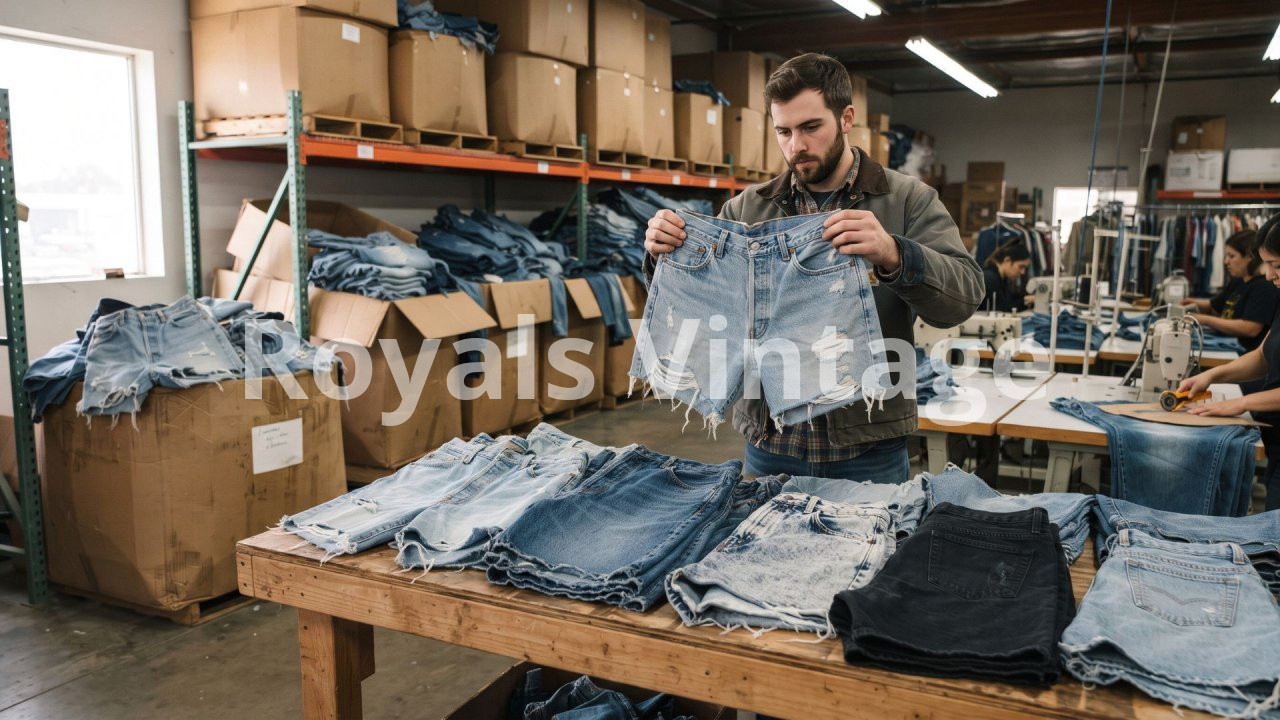
Sorted Denim Bundles
Ask for denim-only lots, and whether shorts and jeans are separated.
Mixed Vintage Bundles and Bales
Cheaper per piece, but more sorting is needed. They often include jeans suited to upcycling.
Surplus and Ex-Retail Stock
Ready-made shorts in consistent condition, though styles can be limited.
Damaged or Lower-Grade Denim
Good source for upcycling, as long as the fabric above the knee is sound.
Curated Vintage Stock
Hand-picked pieces cost more but save time. Royals Vintage works with curated vintage stock, so check which categories appear in each bundle before ordering.
Markets and Charity Clearances
Good for small quantities and low prices, though selection varies.
What to Look For When Sorting
For Ready-Made Jorts
- Clean, even hems
- Strong fabric in the seat and inner thighs
- Interesting washes or natural fading
- Good fit and length for current styles
For Jeans to Cut Down
- Solid fabric above the knee
- Straight or relaxed legs, which usually make good jorts
- Attractive wash and hardware
- Damage that is limited to the lower leg
Condition Problems to Check
- Crotch and inner thighs: thin patches and seam splits.
- Seat: thinning and holes.
- Pockets: holes in pocket bags and loose stitching.
- Waistband and belt loops: stretching, tears, or missing loops.
- Zip and button: make sure both work smoothly.
- Hems: uneven cuts, excessive fraying, or damage.
- Stains and yellowing: especially on lighter washes.
- Smell: stored denim can hold odours.
Light wear and soft fading are part of the appeal. Holes, split seams, and deep stains reduce value.
Sizing Jorts for Resale
Use Measurements, Not Labels
Sizing varies widely, and cut-down jeans may have labels that no longer reflect the new shape.
Measurements That Matter
- Waist: measured flat, then doubled.
- Rise: from the crotch seam to the top of the waistband.
- Hip and thigh: measured flat across the widest points.
- Inseam: from the crotch seam to the hem.
- Leg opening: across the hem.
Explain the Length and Fit
Say whether the pair is knee-length, above the knee, baggy, or fitted. Buyers often care about length as much as waist size.
Note Stretch
Mention fabric content and whether the denim has stretch.
How to Price Jorts for Profit
Calculate Your True Cost
Cost per sellable pair = (lot cost + shipping + taxes and duty + cleaning + alteration time + packaging + payment fees) ÷ number of sellable pairs
Always divide by sellable pairs, not the number ordered.
Check Recent Sold Prices
Search for similar styles, sizes, and conditions. Use sold listings, not asking prices.
Price by Style and Condition
Clean, well-fitting, current styles earn more. Heavily worn pairs should be priced lower.
Consider Seasonal Timing
Prices and demand tend to rise as warm weather approaches, and soften in autumn and winter.
Include All Selling Costs
Platform fees, advertising, packaging, and returns reduce your margin.
Use Bundles
Offer a pair of jorts with a tee or tank to raise order value.
Seasonal Planning
- Late winter: source and prepare stock.
- Early spring: photograph and list, so listings have time to be found.
- Spring and summer: peak sales. Restock bestselling sizes and washes.
- Autumn: discount or store leftover stock for next year.
Because jorts are seasonal, buy and prepare early. Stock that arrives late may not sell until the next year.
How to Prepare and List Jorts
Clean Gently
Wash in cold water with mild detergent, turn inside out, and air dry where possible. Avoid bleach and harsh detergents that can weaken fabric.
Check the Hem After Washing
Frayed edges may continue to unravel, so trim loose threads or stitch the hem if needed.
Measure Every Pair
Record waist, rise, hip, thigh, inseam, and leg opening.
Photograph the Details
Show the front, back, pockets, hem, label, and any flaws in natural light. A photo on a model or a flat lay helps buyers see the length.
Write Clear Titles
For example: “Vintage Baggy Denim Jorts, Light Wash, Knee Length, W32.”
Describe Honestly
If you cut the pair yourself, say so. Describe them as “upcycled” or “cut-off” so buyers know what to expect.
Choose Your Channels
Your own store, resale apps, and social media all work. Short try-on videos suit this product well.
Red Flags in Jorts and Denim Lots
- Prices far below every other supplier.
- No real photos, or stock photos only.
- Claims that all pieces are rare or vintage without proof.
- No clear business details or verifiable history.
- Pressure to pay immediately.
- Hard-to-trace payment methods only.
- Vague answers about grading and quantities.
If several of these appear together, walk away.
Step-by-Step: Placing Your First Jorts Order
- Decide your route: ready-made shorts, upcycling, or both.
- Set a small trial budget: only what you can afford to lose.
- Shortlist three suppliers and compare quality, grading, and communication.
- Request real photos and written terms.
- Order a small test lot.
- Pay with a traceable method.
- Inspect on arrival: crotch, seat, pockets, hems, and stains.
- Sort into ready to sell, upcycle, and not sellable.
- List, track sales, and reorder what works.
Common Mistakes When Reselling Jorts
- Cutting jeans that are worth more as full-length pairs.
- Ignoring crotch and seat damage.
- Listing by label size instead of measurements.
- Cutting unevenly or too short.
- Buying stock too late for the season.
- Not stating that pairs have been cut down.
- Buying large lots before a test order.
Frequently Asked Questions About Jean Jorts
What are jean jorts?
They are denim shorts, often made from jeans, usually cut to a knee-length or longline style.
Can I buy jorts wholesale?
Yes. Resellers usually source through sorted denim bundles, mixed vintage lots, surplus suppliers, and curated vintage stock. Always test a small order first.
Is it better to buy jorts or make them from jeans?
Both work. Ready-made jorts save time, while upcycling can lower costs and use jeans that are too worn to sell as full-length pairs.
Which jeans make the best jorts?
Sturdy, straight or relaxed pairs with good fabric above the knee, and damage limited to the lower leg.
When do jorts sell best?
Demand rises in spring and summer. Prepare and list stock early.
How should I measure jorts?
Record waist, rise, hip, thigh, inseam, and leg opening, and describe the length clearly.
How should I wash jorts?
Turn inside out, wash in cold water with mild detergent, and air dry. Trim or stitch frayed hems if needed.
Should I say if I cut the jeans myself?
Yes. Describe them as upcycled or cut-off so buyers know exactly what they are getting.
Conclusion
Jean jorts can be a strong seasonal product for resellers, thanks to flexible sourcing, wide appeal, and a popular search term. Choose between ready-made shorts and upcycling, check condition carefully, measure and describe every pair, and price from your true cost per sellable pair. Prepare stock early, list before the warm weather arrives, and reorder the styles that sell.
If you want distinctive denim and curated vintage pieces for your resale business, explore the collection at Royals Vintage and discover stock selected for style and quality.